

Why we opened this campaign
“Amputation is the only chance to survive.”
These are the words everyone fears hearing while sitting in a doctor’s office. In February of this year, Alex heard them.
Alex is a father of five children, aged 17, 15, 13, 7, and almost 5. Since 1996, following a serious accident, he has lived with a 75% disability due to fractures in his arms and legs. But he never allowed it to define his life. He worked, got the children ready for school and kindergarten, and remained the source of support that held the family together. His disability allowance, occasional jobs, and his wife’s cleaning work helped the family gradually build a more stable life. Until very recently.
Two and a half years ago, a small wound appeared at the site of an old fracture. “It’s nothing serious,” the doctors said. Alex dressed the wound himself and continued living as usual. It grew slowly, almost imperceptibly. Last winter, it began to hurt and increase in size.
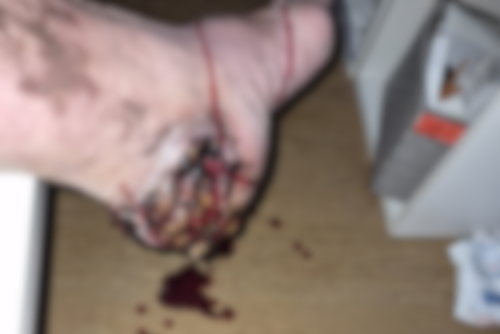
Then the family began consulting more senior doctors. The answer was always the same: either amputation, or find a surgeon willing to risk trying to save the leg, with no guarantees. A biopsy was needed, but it kept being delayed while the pain grew worse. Eventually, the family managed to secure an appointment with a well-known specialist. He reviewed the test results and said plainly that the infection had affected Alex’s blood so severely that surgery had to be performed the very next day. “The only chance to survive is to amputate the leg below the knee.”
There was no choice — Alex agreed. But no one prepares you for the operation or for what comes afterward.
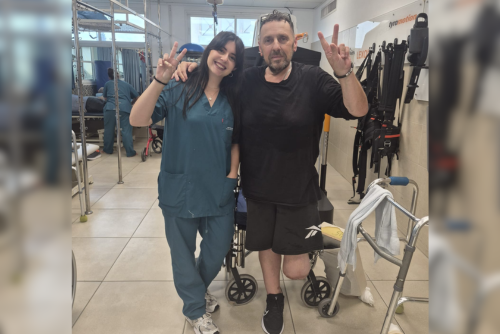
Since February, Alex has barely been able to get out of bed. He is in severe pain and depends on painkillers. His wife had to stop working — there are five children at home and a husband who requires constant care. The family went from two sources of income to just one: a disability allowance of 10,800 shekels. It is no longer enough to cover even their basic needs.
This is what one month costs them:
— Rent — 4,000
— Bills, internet, and phone — 2,000
— Medication and essential supplies — 1,500–1,800
— Food for a family of seven — 6,000
The total is already higher than the family’s entire monthly income.
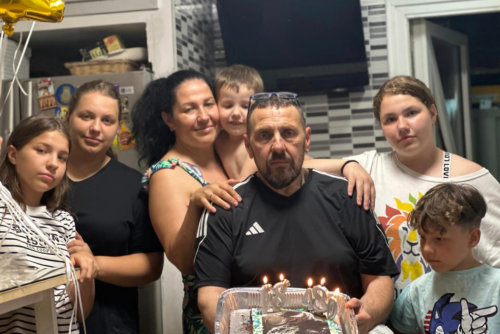
Alex is currently in a hospital near Tel Aviv, while his family lives in Ma’alot-Tarshiha in northern Israel. A single visit to see their father costs 250–300 shekels in transportation for his wife and children. Bringing him juice or something he enjoys raises the cost to around 500 shekels. For a month, he has been eating the same hospital chicken and looking at his children through a phone screen because he cannot see them in person. Taking him home for the weekend requires a taxi that costs about 300 shekels each way.
But there is also good news. His leg is healing: the stitches have been removed, and the next steps are compression therapy, a prosthetic leg, and rehabilitation. Alex will walk again. He will once again get his children ready for school. He will once again become the source of support he has always been.
But to reach that day, the family needs help getting through this period.
They need:
— a prosthetic leg and rehabilitation;
— a wheelchair (a 1,300-shekel deposit plus 130 shekels per month);
— transportation to and from the hospital;
— and simply food, bills, and a roof over their heads while Alex is, quite literally, getting back on his feet.
For 25 years, Alex lived with a disability, worked, and raised his children. Now, for the first time, others have to ask for help on his behalf.
Any amount will help this father of five return home, learn to walk with a prosthetic leg, and hold his children in his arms again.