
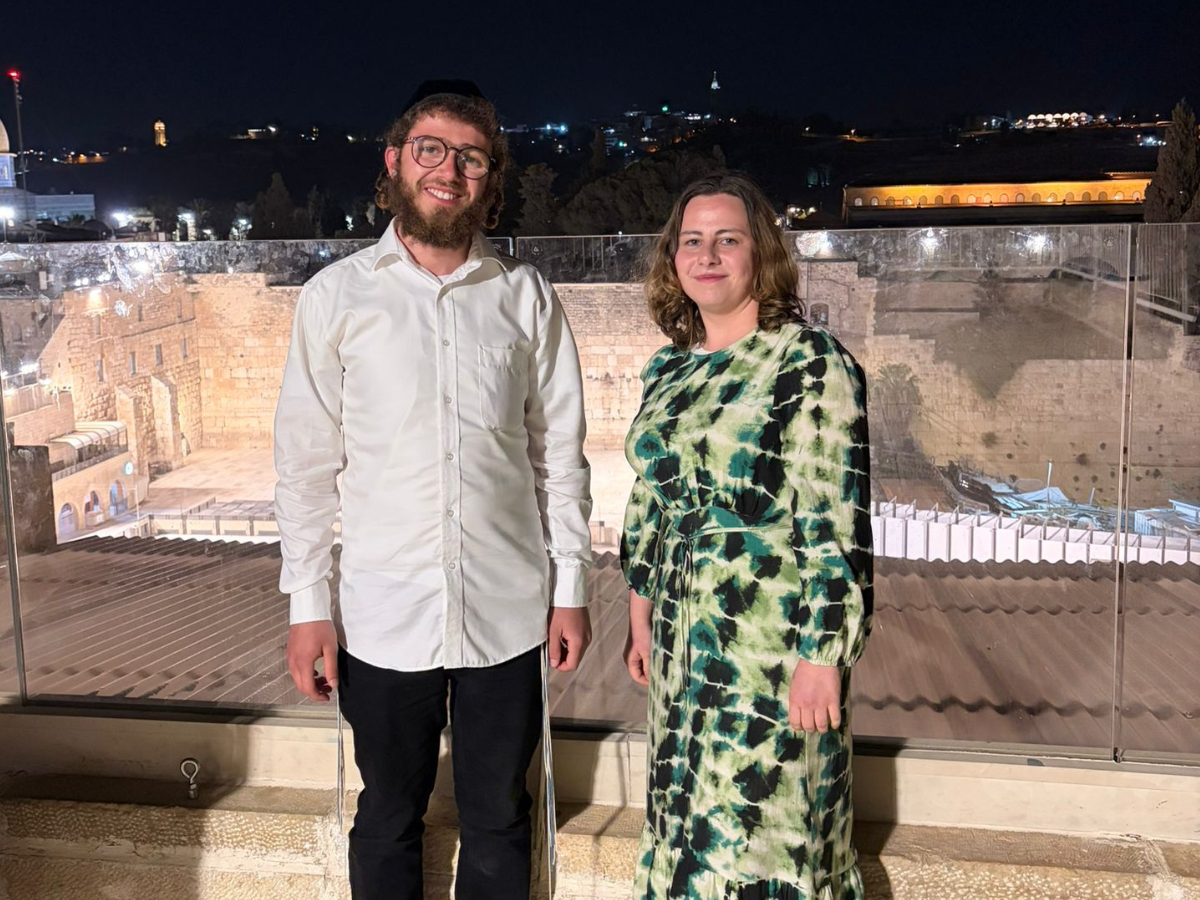
Why we opened this campaign
Two young people are about to stand under the chuppah. And two families have almost nothing set aside to make that chuppah possible.
Aharon Meir studies in a yeshiva in Elad. His mornings are devoted to Torah. In the afternoons, he works part-time, because he understands that the family he is building is also his responsibility. He loves nature and travels to the gravesites of tzaddikim. He says that there, the Creator is heard differently.
Simcha works at an institution for children with special needs in Jerusalem. In the mornings, she accompanies children to school — patiently, as if they were her own. At the same time, she is studying psychology: she wants to work with those who need support the most. The way she cares for her nieces and nephews makes it clear: she is ready for motherhood in every way, except for motherhood itself.
Both families live modestly. There is no safety cushion, no savings account “for the children’s wedding.” Aharon Meir’s father is an avrech at Toldot Yeshurun, and in the evenings he runs the organization’s branch in Rishon LeZion. His mother works as a phone operator at Ayelet HaShachar.
In Simcha’s family, the situation is even harder. Her father suffered a stroke and is now barely functioning, requiring constant care. Her mother carries the weight of the entire family alone, working as a dental assistant. Every morning begins with counting bills and deciding what can be paid this month — and what will have to wait.
And now — the wedding. And almost everything is still missing.
There is not enough money for the hall. And without a hall, the chuppah cannot take place. There is not enough for catering. And a Jewish wedding without a table set for the people closest to them is not truly a wedding.
And that is before wedding rings, before clothing for the younger siblings, before the hundred small expenses that, in ordinary life, somehow get solved. Here, they do not. Aharon Meir’s family does not have the means. Simcha’s family has even less.
They are not asking for someone to “solve everything forever.” They need one thing: to get through these first weeks — the wedding and the move. After that, they will carry on by themselves. He will continue learning and working. She will continue working and completing her psychology studies. Right now, they need a foundation to start from.
Hachnasat Kallah — helping a bride and groom marry with dignity — is one of those mitzvot whose reward, our sages teach, is beyond measure. And this is exactly the kind of case for which it was given. Young, sincere, hardworking people, walking toward G-d. They will have everything one day — but not today.
Help Aharon Meir and Simcha get married. So that their first Shabbat at their own table — truly their own — can happen already this month.








.png)